-
-
Call for inquiry
-
B-21, Block-2, Gulshan-e-Iqbal
Karachi, Pakistan
Karachi, Pakistan

Introduction
With increasing water scarcity, stricter environmental regulations, and rising operational costs, industries in Pakistan are under growing pressure to adopt efficient and reliable wastewater treatment solutions. Selecting the right treatment technology is no longer just about compliance. It is about long-term sustainability, water reuse potential, and operational resilience.
Among the most widely adopted biological treatment technologies, Sequencing Batch Reactor (SBR) and Continuous Flow wastewater treatment systems are often compared. Each has distinct advantages and is suited to specific industrial and municipal conditions.
Understanding the differences between these two systems is essential for making informed decisions that align with site constraints, influent characteristics, and reuse objectives.
What is a Sequencing Batch Reactor (SBR)?
The Sequencing Batch Reactor is a time-based biological treatment process in which all treatment steps, filling, aeration, settling, and decanting, take place sequentially within the same tank.
Unlike conventional continuous systems, SBR treats wastewater in batches, allowing greater control over treatment cycles and flexibility in handling fluctuating flows and loads.
Key Features of SBR Systems:
What is a Continuous Flow Wastewater Treatment System?
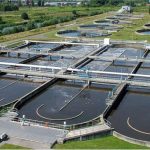
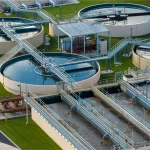
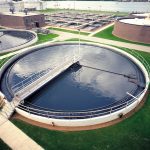
Continuous flow systems operate with constant inflow and outflow of wastewater, passing through multiple treatment units such as aeration tanks, secondary clarifiers, and sludge return systems.
These systems are designed for steady-state operation and are commonly used in large municipal and industrial applications where wastewater generation is consistent.
Key Features of Continuous Systems:
Key Differences Between SBR and Continuous Systems
Process Operation
SBR systems operate in cycles, allowing treatment stages to be controlled by time. Continuous systems rely on uninterrupted flow through multiple treatment units.
Footprint and Infrastructure
SBR systems require fewer tanks and smaller land area, while continuous systems need larger footprints due to multiple process units.
Flexibility and Load Handling
SBR offers superior flexibility for variable flows and shock loads. Continuous systems perform best under stable and predictable conditions.
Automation and Control
SBR systems depend heavily on automation and instrumentation for sequencing. Continuous systems are mechanically simpler but require flow balancing.
Effluent Quality
Both systems can achieve regulatory compliance. SBR systems can be optimized for nutrient removal, while continuous systems may require additional process stages.
Which System is Better for Industrial Applications in Pakistan?
The choice between SBR and continuous flow systems depends on several site-specific factors.
SBR is suitable when:
Continuous Flow Systems are suitable when:
Environmental and Operational Considerations
Both systems contribute to improved environmental performance by reducing pollution load on receiving water bodies. However, system selection directly impacts energy consumption, operational complexity, sludge management requirements, and the potential for future water reuse or upgrades.
A poorly matched technology can increase lifecycle costs and limit reuse potential, making proper engineering evaluation critical.
Role of Engineering and Design Expertise
At Abamet Pakistan, technology selection is driven by process engineering, lifecycle cost analysis, and sustainability objectives. Rather than offering one-size-fits-all solutions, each system is evaluated based on influent characteristics, compliance requirements, space constraints, and reuse goals.
Whether deploying an SBR or a continuous system, the right design approach ensures stable performance, regulatory compliance, and long-term value.
Conclusion
Both Sequencing Batch Reactor (SBR) and Continuous Flow wastewater treatment systems have proven their effectiveness across industrial and municipal applications. The key to success lies not in the technology itself, but in selecting the right system for the right conditions.
By aligning treatment technology with operational realities and sustainability goals, industries in Pakistan can transform wastewater from a compliance burden into a strategic resource.
Smart engineering. Sustainable treatment. A cleaner future.