-
-
Call for inquiry
-
B-21, Block-2, Gulshan-e-Iqbal
Karachi, Pakistan
Karachi, Pakistan

Introduction
As water scarcity intensifies across Pakistan, industrial sustainability has moved from being a choice to a necessity. Major industrial cities such as Karachi, Lahore, and Faisalabad are facing declining groundwater levels, stricter environmental regulations, and increasing pressure to reduce freshwater consumption.
Recognizing this challenge, Abamet Pakistan has delivered a landmark solution for one of the country’s most sustainability-driven manufacturers. The successful implementation of the Membrane Coagulation Reactor (MCR) recycling plant at Rajby Industries marks a major step forward in industrial water reuse and circular water management in Pakistan.
This project demonstrates how advanced, locally engineered technologies can deliver global performance standards while supporting national sustainability goals.
Project Overview: MCR Plant at Rajby Industries
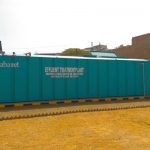
Rajby Industries, a globally recognized leader in sustainable denim manufacturing, partnered with Abamet Pakistan to implement Pakistan’s first-ever Membrane Coagulation Reactor (MCR)–based industrial water recycling plant.
Project Highlights:
The objective was clear: significantly reduce freshwater intake, minimize wastewater discharge, and establish a reliable internal water recycling system aligned with international sustainability benchmarks.
Why MCR Was the Right Choice for Rajby Industries
The Membrane Coagulation Reactor (MCR) was selected due to its ability to address complex industrial wastewater challenges within a compact and energy-efficient framework.
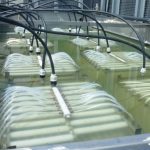
Unlike conventional treatment systems that require multiple process stages and large footprints, the MCR integrates coagulation, biological treatment, and membrane filtration into a single, optimized system.
Key Advantages for Rajby Industries:
This made MCR an ideal solution for a modern textile facility aiming to balance operational efficiency with environmental responsibility.
Engineered & Delivered by Abamet Pakistan
The Rajby Industries MCR plant was designed, supplied, installed, and commissioned entirely by Abamet Pakistan, showcasing the company’s in-house engineering capabilities and commitment to innovation.
Through extensive research, pilot testing, and process optimization, Abamet developed a system that is not only technically robust but also economically viable for large-scale industrial adoption.
This project reinforces Abamet’s position as a pioneer of advanced wastewater treatment and recycling technologies in Pakistan.
Environmental & Operational Impact
The implementation of the MCR plant has delivered measurable and meaningful results for Rajby Industries:
Key Impacts:
By recycling water internally, Rajby Industries has reduced its reliance on groundwater resources while strengthening its sustainability credentials globally.
Contribution to Sustainable Development Goals (SDGs)
The MCR plant at Rajby Industries directly supports multiple United Nations Sustainable Development Goals:
This project demonstrates how industrial innovation can play a critical role in national climate resilience and sustainable industrial growth.
Setting a Benchmark for Pakistan’s Textile Industry
As Pakistan’s textile sector faces increasing scrutiny over water usage and environmental impact, the Rajby Industries MCR project serves as a benchmark for sustainable manufacturing.
Following this success, several other industrial leaders are exploring MCR-based recycling systems to:
Conclusion
The Abamet MCR Plant at Rajby Industries is more than a wastewater treatment facility-it is a proof of concept for sustainable industrial water management in Pakistan.
By combining innovation, efficiency, and environmental stewardship, Abamet Pakistan has enabled one of the country’s leading textile manufacturers to achieve true water circularity.
With projects like this, Pakistan is taking tangible steps toward water-secure industrialization-where economic growth and environmental responsibility go hand in hand.
Innovating for sustainability. Engineering for the planet.
Abamet is redefining the future of water-one industry at a time.